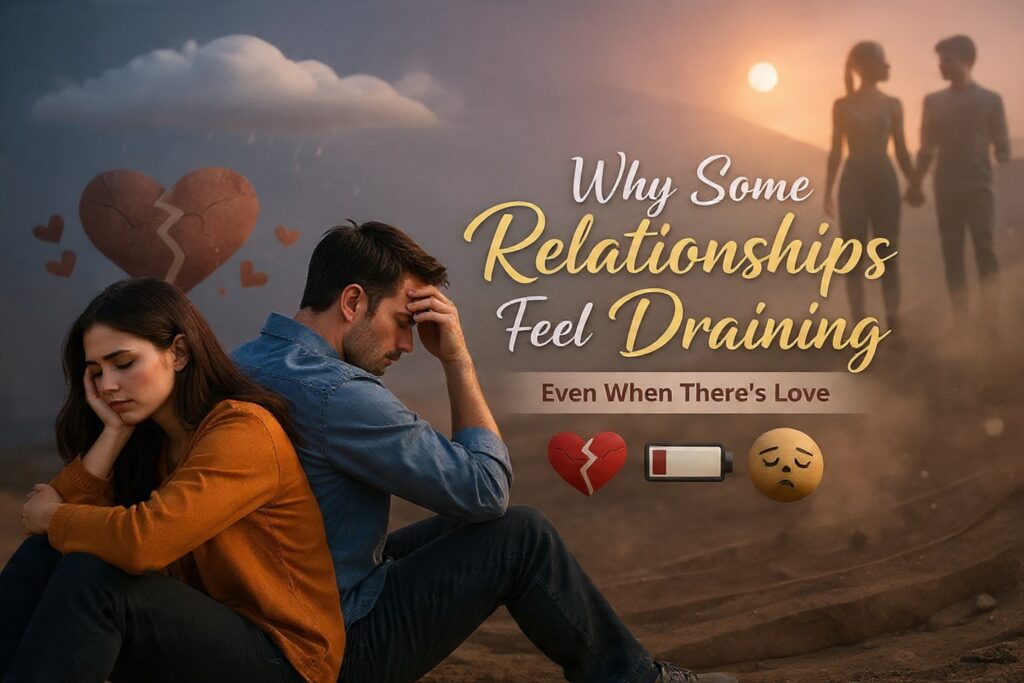
Love is supposed to feel safe, warm, and nourishing. Yet, many people find themselves emotionally exhausted even when they deeply care for their partner. Feeling drained doesn’t mean love is missing; it often points to deeper emotional dynamics that need attention.
Even in loving relationships, imbalance in emotional effort, unclear boundaries, and mismatched expectations can slowly deplete your energy. Understanding why this happens is the first step toward creating healthier, more fulfilling connections.
1. Love Alone Is Not Enough
Many assume that love should automatically make a relationship effortless. While love is important, it cannot replace emotional balance, mutual effort, and healthy boundaries.
A relationship can feel draining if:
- One partner carries most of the emotional responsibility.
- Needs remain unspoken or unmet.
- Love starts feeling like obligation or emotional labor.
Even genuine affection cannot sustain energy if the emotional structure supporting it is weak. It’s essential to recognize that love is just one ingredient in a healthy relationship. Without communication, support, and boundaries, it can’t prevent fatigue.
2. Emotional Dependency vs Emotional Support
Emotional dependency occurs when one partner becomes the primary source of stability for the other.
Signs of emotional dependency:
- Feeling responsible for your partner’s happiness.
- Constant need for reassurance.
- Guilt when prioritizing your own needs.
- Fear of being alone or creating distance.
Instead of mutual support, the relationship can become a source of anxiety, guilt, and obligation. Emotional dependency turns love into a heavy weight, making even affectionate moments feel exhausting. Support should be shared, not carried by just one person.
3. Unspoken Expectations Create Silent Pressure
Many draining relationships aren’t overtly toxic—they are quietly exhausting.
Common unspoken expectations:
- “You should understand me without explaining.”
- “If you loved me, you’d do this.”
- “I sacrificed, so you should too.”
When needs aren’t communicated clearly, resentment builds beneath the surface. You may feel you’re failing even when trying your best, which slowly erodes emotional energy. Over time, these silent pressures can make love feel more like responsibility than joy.
4. Lack of Boundaries
Boundaries are essential for emotional health. Without them, love can easily turn into burnout.
Examples of boundary issues:
- Always being available to your partner.
- Absorbing their stress as your own.
- Feeling guilty for saying “no.”
- Losing personal space and identity.
Healthy boundaries don’t reduce love—they protect it. They ensure that both partners can be emotionally present without losing themselves. Without boundaries, the relationship slowly drains your energy and can leave you feeling overwhelmed.
5. One-Sided Emotional Effort
If one person always initiates conversations, resolves conflicts, or sacrifices their needs, the relationship can feel heavy.
Signs of one-sided effort:
- You are always the first to apologize.
- You constantly adjust your plans for your partner.
- Emotional labor is mostly carried by one person.
Love needs reciprocity to stay nourishing. Constant giving without receiving equal emotional effort creates exhaustion and resentment, making love feel like work instead of support.
6. Communication Without Emotional Safety
Talking is not always healing. Emotional safety is essential for effective communication.
Signs communication is draining:
- You hesitate before expressing feelings.
- You fear your partner’s reactions.
- Your emotions are dismissed, minimized, or laughed off.
When emotional safety is missing, conversations can create anxiety instead of connection. Honest communication should bring relief, not exhaustion. Feeling heard, understood, and validated is key to emotional replenishment.
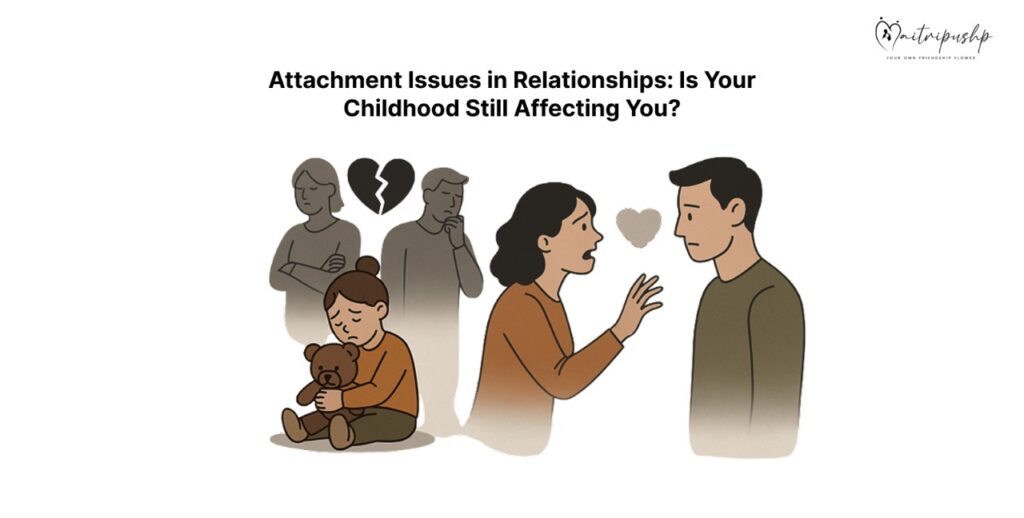
7. Attachment Styles at Play
Different attachment styles can silently drain relationships.
Examples:
- Anxious attachment: seeks constant closeness and reassurance.
- Avoidant attachment: seeks space and independence.
When these needs clash, both partners can feel misunderstood, rejected, or emotionally fatigued—even when love exists. Understanding your own and your partner’s attachment style can help create empathy, patience, and healthier interaction patterns.
8. Personal Growth vs Relationship Stagnation
As we grow, our emotional needs evolve. A relationship may feel draining if it doesn’t evolve with us.
Signs your growth may cause strain:
- Healing or self-awareness changes what you need emotionally.
- Old patterns no longer fit your evolving self.
- You feel pressure to shrink or compromise too much to maintain harmony.
Outgrowing a dynamic doesn’t mean love has failed—it means growth is happening. Both partners need to evolve together, or at least create space to honor each other’s changes.
9. How to Restore Energy in a Relationship
To prevent emotional exhaustion, focus on:
- Clear communication: Express needs kindly and openly.
- Healthy boundaries: Protect personal space and emotional energy.
- Shared emotional responsibility: Both partners should contribute equally.
- Self-care and independence: Prioritize your own growth and well-being.
- Professional counseling: Seek guidance if exhaustion persists despite effort.
Love should feel nourishing, not depleting. Paying attention to emotional balance strengthens both the relationship and your own well-being.
10. When to Seek Support
If emotional fatigue continues despite effort, therapy or counseling can help.
Benefits of professional support:
- Identifies hidden patterns that drain energy.
- Improves communication and understanding between partners.
- Helps determine whether healing is needed individually, as a couple, or both.
Seeking help is not a sign of weakness—it’s a step toward healthier, more fulfilling love.
Frequently Asked Questions
- Can a relationship be draining even if both partners love each other?
Yes. Love alone doesn’t guarantee emotional balance. Unhealthy patterns like dependency or lack of boundaries can exist despite genuine affection. - Does feeling drained mean the relationship is toxic?
Not always. Feeling exhausted can result from imbalanced effort, unmet needs, or poor communication rather than toxicity. - Why do I feel tired after spending time with my partner?
Emotional over-giving, constant reassurance, or unresolved tension can drain your energy, even when love is present. - Is emotional exhaustion a sign to break up?
Not necessarily. It’s a signal to reflect, communicate, and seek support before making decisions. - Can setting boundaries improve a draining relationship?
Yes. Boundaries protect emotional energy and often restore balance and clarity. - How do attachment styles affect relationship fatigue?
Mismatched attachment styles create emotional push-pull dynamics, causing stress and confusion despite love. - What if only one partner feels drained?
This usually indicates that emotional effort is uneven or needs are not being acknowledged. - Can therapy help with emotionally draining relationships?
Absolutely. Counseling helps uncover hidden patterns, improve communication, and restore balance. - Is it normal to feel guilty for needing space?
Yes, but guilt usually arises from weak boundaries, not wrongdoing. Healthy space is essential. - How do I know if love is still healthy?
Healthy love feels safe, mutual, supportive, and emotionally nourishing, even during conflict or growth.