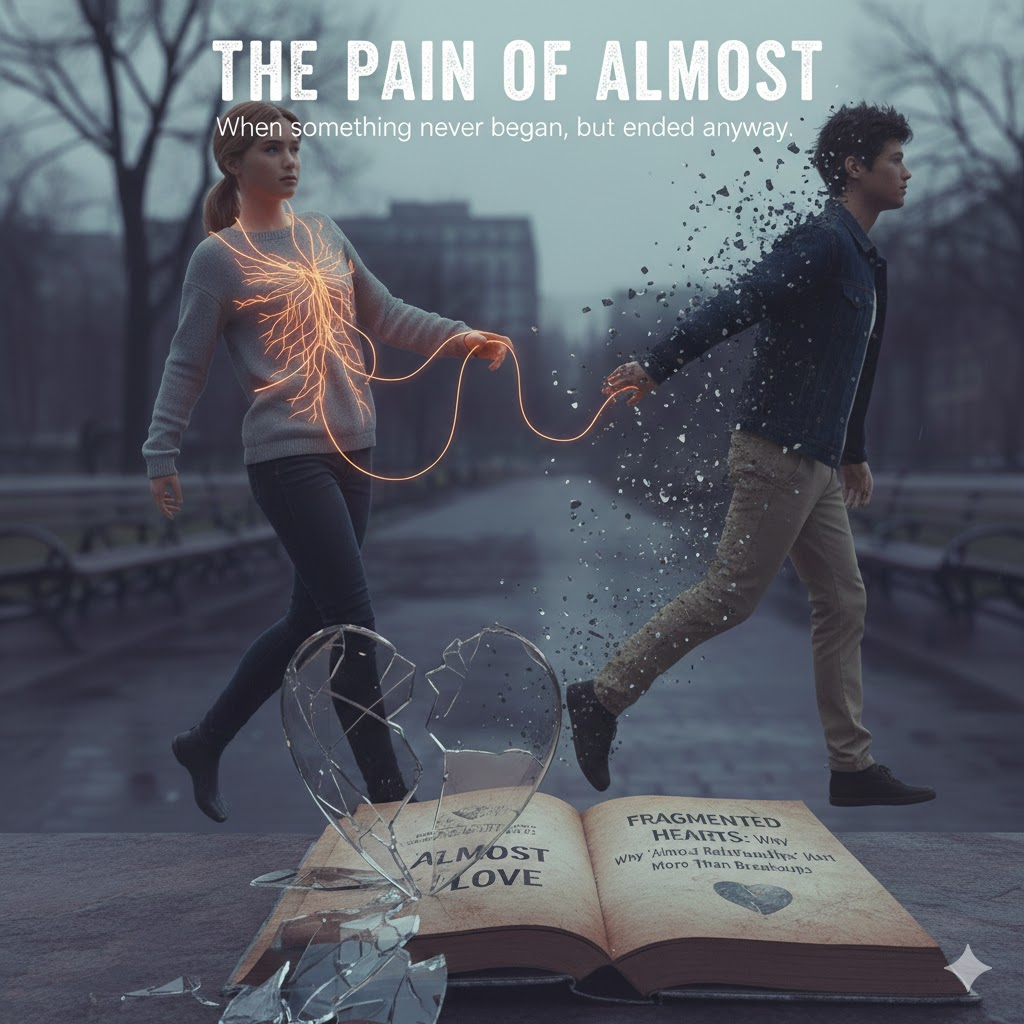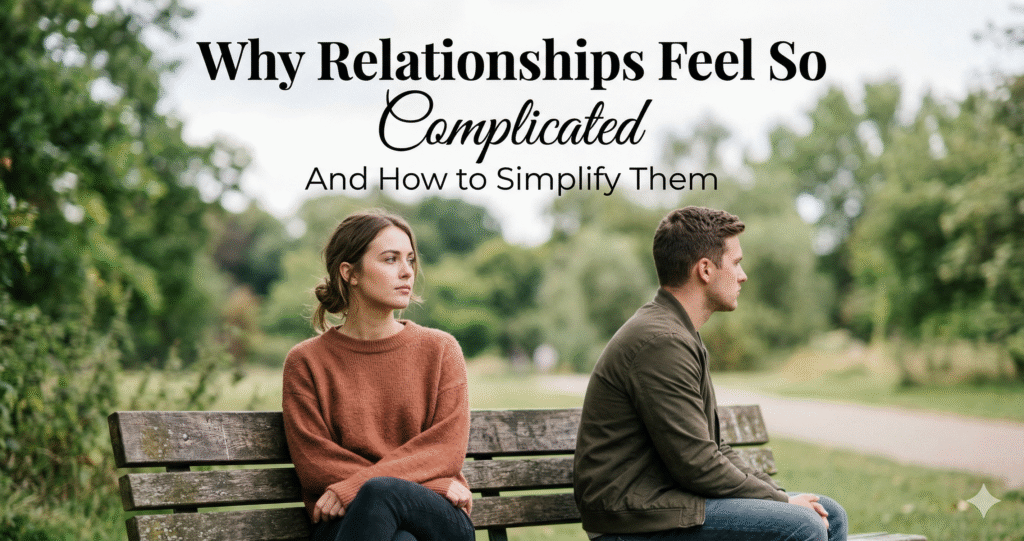
You’ve Googled it. You’ve vented about it to your best friend at 1 a.m. You’ve probably even cried about it. Why are relationships so complicated? It’s the question nobody wants to admit they’re asking — but almost everyone is.
We live in a world where you can order dinner in two taps, video call someone across the globe, and find a date with a swipe. And yet, loving another human being remains one of the most beautifully, frustratingly difficult things we’ll ever do.
The truth is, it’s not just you. It’s not just your partner. It’s not bad luck. There are deep, real, very human reasons why relationships get so tangled — and once you understand them, everything starts to make a little more sense.
Let’s get into it.
We All Bring Invisible Baggage to the Table
Here’s something nobody tells you on your first date: you’re not just meeting one person. You’re meeting every experience, fear, and wound they’ve ever carried. And they’re meeting yours.
Emotional baggage in relationships isn’t a flaw — it’s simply the human condition. Childhood trauma, past heartbreaks, parents who didn’t communicate well, or a relationship where you were betrayed — all of it leaves a mark. Psychologists call these “emotional imprints,” and they quietly shape how we give and receive love as adults.
“Our unconscious mind doesn’t forget. It just goes quiet — until someone we love accidentally presses the old bruise.”
Think about the last time your partner came home late without texting. Maybe a small flicker of panic shot through you — not just annoyance, but something older. That’s not an overreaction. That’s your attachment style speaking. Whether you’re anxiously attached, avoidantly attached, or somewhere in between, your early experiences literally rewire how you respond to closeness and distance in love.
How Childhood Trauma Affects Adult Relationships
If you grew up in a home where love felt conditional, unpredictable, or absent, your nervous system learned to stay on guard. Now, as an adult, intimacy can feel like standing on the edge of something dangerous — even when you’re completely safe. This is why fear of intimacy is one of the most common and least-talked-about reasons relationships get complicated.
15 Real Reasons Why Relationships Are So Complicated
Whether you’re in a new relationship, a long-term partnership, or recovering from one that ended — these reasons will probably feel very familiar.
Communication gaps quietly grow
Most couples don’t stop talking overnight. They slowly stop saying the real things — and start giving short answers, vague replies, or silence. Those gaps compound over time.
Unspoken expectations vs. reality
You expected a partner like the ones in movies. They expected someone just like their idea of perfect. Nobody told either of you that real love is messier — and actually better — than that.
Fear of abandonment runs the show
When someone is five minutes late to reply, and your stomach drops — that’s not drama. That’s an old fear steering a very adult situation.
The thrill fades, and panic sets in
That electric, can’t-stop-thinking-about-you feeling does mellow over time. Many people mistake this natural shift for falling out of love — when really it’s just love deepening.
Opposing values create silent friction
You value quality time. They recharge alone. You want to plan everything. They live spontaneously. None of this is wrong — but without honest conversation, it becomes war.
Past trauma gets triggered unexpectedly
Your partner cancels plans. A perfectly reasonable thing. But if someone once abandoned you, your body doesn’t always know the difference between then and now.
Intimacy requires vulnerability — which is terrifying
Being truly known by someone means they could truly hurt you. Many of us protect ourselves by keeping one emotional wall standing, always.
Assumptions replace honest conversations
“They should just know how I feel.” Sound familiar? Assumptions are the silent relationship killer — and social media makes this worse by showing us highlight reels of other couples.
Nobody taught us conflict resolution
Most of us grew up watching adults either explode or go stone-cold silent during fights. We inherited their patterns — and now use them on the people we love most.
External pressure from family and friends
“Are you sure about them?” “I heard they did this…” People in your inner circle have real influence, and not always in helpful directions.
Fear of commitment keeps one foot out the door
Commitment means betting on someone — on yourself — to show up consistently. For people who’ve been hurt, that can feel like the most dangerous thing in the world.
Taking the little things for granted
The thank-yous that stop. The compliments that disappear. The small gestures that went unnoticed. These “little things” are actually the entire foundation.
Emotional unavailability on either side
When one partner shuts down emotionally — whether from stress, past hurt, or habit — the other is left reaching into an empty space. That distance compounds fast.
Trust issues that never got addressed
Trust, once cracked, doesn’t repair itself. Without intentional effort — often including honest conversations or professional support — the crack quietly becomes a wall.
We unconsciously seek partners who mirror our wounds
Psychologists suggest we’re drawn to people who resemble our earliest caregivers — because our unconscious mind wants to heal those old patterns. That’s beautiful and complicated all at once.
How to Actually Fix a Complicated Relationship
Understanding why relationships are hard is step one. Here’s how to move forward — without toxic positivity or unrealistic advice.
Say the uncomfortable thing. Most relationship problems live in the sentences we never finish. Practice saying what you actually mean — gently, but clearly.
Know your attachment style. Anxious, avoidant, or secure — understanding your patterns is one of the most powerful things you can do for your love life.
Stop assuming, start asking. Replace “they should know” with “let me tell them.” It feels vulnerable. It works.
Build emotional intimacy in small moments. Connection isn’t built in grand gestures. It’s built in the daily check-ins, the eye contact, the “how are you really doing?”
Consider therapy — individually or together. Couples counseling isn’t a last resort. It’s one of the smartest investments a relationship can make.
Frequently Asked Questions
1. Why are relationships so hard and complicated even when you love each other?
Love is genuine, but love alone doesn’t resolve communication gaps, emotional triggers, or mismatched expectations. Complicated feelings can coexist with deep love — and working through them is what builds lasting connection.
2. How does childhood trauma affect adult relationships?
Early experiences shape our emotional blueprints. If your childhood involved inconsistent love, emotional neglect, or instability, your nervous system learned to protect itself — and those defenses can make intimacy feel threatening as an adult.
3. Why do I keep choosing the wrong partner?
Unconsciously, we often seek partners who reflect our earliest emotional experiences — including painful ones. This isn’t a character flaw. It’s a pattern, and patterns can be recognized and changed.
4. How do I overcome fear of commitment in relationships?
Start by identifying where the fear comes from — past betrayal, family patterns, or fear of losing yourself. Therapy, honest self-reflection, and gradual emotional exposure with a safe partner all help significantly.
5. Why do relationships lose their spark over time?
The early rush of new love is driven by novelty and neurochemistry. When that settles, it can feel like loss — but it’s actually an invitation to build something deeper, more stable, and far more sustaining.
6. Why do I feel emotionally disconnected from my partner?
Emotional disconnection usually builds gradually through unresolved conflicts, unspoken needs, or life stress. It’s repairable — but it requires both partners to be honest about what’s missing and willing to rebuild.
7. What are the signs your relationship is getting too complicated?
Common signs include constant miscommunication, walking on eggshells around your partner, recurring arguments that never get resolved, emotional withdrawal, or feeling lonelier inside the relationship than outside of it. These are not signs to give up — they’re signs to pay attention and act.
8. Can a complicated relationship be saved?
Yes — in most cases. A complicated relationship isn’t a failed one. What matters is whether both partners are willing to be honest, take accountability, and put in consistent effort. Many couples who felt completely stuck have rebuilt something far stronger than what they had before.
9.How do trust issues affect a relationship?
Trust issues create a constant undercurrent of anxiety and hypervigilance. You may find yourself reading into small things, needing constant reassurance, or pushing your partner away to test whether they’ll stay. Left unaddressed, trust issues erode even genuinely loving relationships over time.
10. Why do I self-sabotage my relationships?
Self-sabotage is usually a defense mechanism. If you’ve been hurt before, your unconscious mind may start creating problems to avoid the pain of being hurt again first. It’s a way of feeling in control — but it quietly destroys the very connection you want. Recognizing the pattern is the first step to breaking it.