Story — The Two Cups
When Asha first met Rohit at a college festival, she noticed two simple yet memorable things about him. One was his warm laugh — the kind that instantly put people at ease. The other was a slightly chipped ceramic cup he carried everywhere. At the time, the cup seemed ordinary, almost forgettable. But as their relationship grew, that cup quietly became a metaphor for how they loved each other.
Years later, on a rainy evening filled with tension after an argument about finances and future responsibilities, the house felt heavy with silence. Asha felt emotionally distant, questioning whether love was supposed to feel this exhausting. Rohit walked into the kitchen, washed his old cup, poured warm tea, and handed it to her gently. Asha noticed the crack again and hesitated. Rohit smiled and said softly, “It’s not perfect, but it still holds warmth. Just like us.”
That moment didn’t magically fix their problems, but it reminded Asha of something important — a healthy relationship isn’t about being flawless. It’s about showing care even when things feel fragile.
Now compare this with Meera’s experience. Meera once believed she was in love with Sameer. But over time, his criticism became frequent. He mocked her feelings in front of others, dismissed her boundaries, and later apologized privately. Each apology came with promises, but no real change. Slowly, Meera began people-pleasing — editing her words, silencing her needs, and shrinking herself to avoid conflict. Even while sitting next to him, she felt deeply alone. By the time she left, she wasn’t just heartbroken — she had lost her sense of self-worth.
Two cups. One cared for with intention. The other cracked repeatedly through neglect.
Moral:
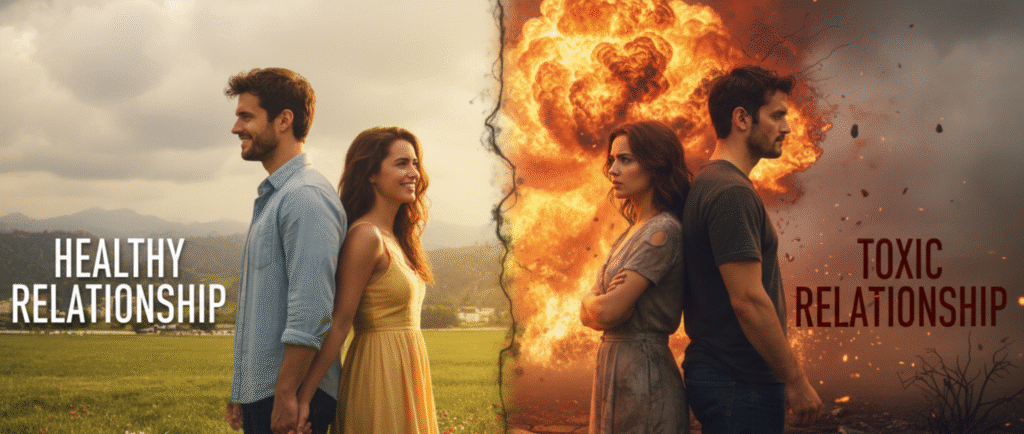
Healthy relationships are built through small, consistent acts of respect, communication, and care. Toxic relationships aren’t always dramatic or obvious — they quietly damage self-esteem through repeated disrespect, emotional neglect, and broken boundaries.
Why This Matters
People rarely search for healthy vs unhealthy relationships out of curiosity. They search because something feels wrong. They feel emotionally drained, confused, or unhappy in their relationship but can’t quite name why. Relationships don’t come with instruction manuals, and emotional abuse or unhealthy patterns often develop slowly.
Understanding the difference between healthy relationship signs and toxic relationship red flags helps protect your emotional wellbeing. It empowers you to choose connection that feels safe, respectful, and emotionally supportive — not exhausting or anxiety-driven.
10 Signs of a Healthy Relationship (What Makes It Work)
1. Consistent Respect
In healthy relationships, respect is stable — not conditional. Even during disagreements, partners avoid belittling, gaslighting, or dismissive behaviour. Respecting boundaries and emotions builds trust and emotional safety over time.
2. Open and Honest Communication
Healthy communication in relationships doesn’t mean never arguing — it means expressing thoughts and feelings without fear. Conversations feel open, not threatening. Partners listen to understand, not to win.
3. Emotional Safety
A strong sign of a healthy relationship is emotional safety. You can be vulnerable without fear of ridicule, punishment, or silence. Mistakes are met with understanding, not shame.
4. Mutual Support
In a healthy relationship, partners genuinely support each other’s growth — career goals, emotional healing, and personal development. One person’s success doesn’t trigger insecurity; it strengthens the bond.
5. Reliable Actions and Trust
Trust is built through consistent behaviour. Healthy partners follow through on commitments, respect agreements, and align actions with words. Reliability creates emotional security.
6. Shared Responsibility
Healthy relationships involve shared emotional, financial, and practical responsibility. No one person carries all the emotional labour. Decisions are made together, fostering balance and fairness.
7. Healthy Boundaries
Setting and respecting boundaries is essential. Healthy partners honor individuality, friendships, privacy, and personal space without guilt-tripping or control. Boundaries strengthen connection, not weaken it.
8. Constructive Conflict
Arguments are normal. What matters is how conflict is handled. Healthy couples focus on resolving issues rather than attacking character. Conflict becomes a path to understanding, not emotional damage.
9. Affection and Appreciation
Daily affection — verbal appreciation, small gestures, and emotional presence — keeps relationships strong. Feeling seen and valued prevents emotional distance.
10. Growth Mindset
Healthy couples accept that no one is perfect. They view challenges as shared problems. It’s always us vs the issue, never you vs me.
8 Signs of a Toxic Relationship (Red Flags)
1. Belittling or Gaslighting
Gaslighting in relationships causes you to doubt your reality, emotions, and self-worth. Constant criticism or emotional manipulation erodes confidence over time.
2. Controlling Behaviour
Controlling behaviour in partners may look subtle — checking phones, questioning friendships, or restricting independence. Control replaces trust and damages emotional freedom.
3. Repeated Unresolved Issues
Apologies without change are warning signs. Toxic relationships repeat harmful patterns because accountability is missing.
4. Isolation from Support Systems
Isolation from family or friends weakens emotional support. Toxic partners often discourage outside connections to maintain control.
5. Emotional or Physical Intimidation
Fear, yelling, threats, or physical harm are signs of emotional or physical abuse. Love should never feel unsafe.
6. Dishonesty and Secrecy
Consistent lying or secrecy destroys trust and creates anxiety. Transparency is essential for emotional wellbeing.
7. Blame Culture
In toxic relationships, responsibility is always shifted. One partner is constantly blamed, damaging self-esteem and confidence.
8. Withholding Affection
Withholding love or attention as punishment is a form of emotional control. Healthy love is never conditional.
Practical Steps to Build a Healthy Relationship
Building a healthy relationship requires daily intention. Start by naming behaviours instead of attacking characters. Schedule regular emotional check-ins. Practice genuine apologies with action. Maintain individuality alongside togetherness. Set boundaries clearly. Seek emotional support or relationship coaching when needed. Express gratitude daily and create small rituals that nurture connection.
Conclusion
Healthy relationships aren’t perfect — they’re intentional. Like Asha and Rohit’s chipped cup, love survives through care, patience, respect, and consistent effort. Toxic relationships drain emotional energy, self-esteem, and peace. Understanding the difference between healthy vs toxic relationship traits allows you to protect your emotional wellbeing and choose connections rooted in respect, safety, and growth.
Frequently Asked Questions (FAQs)
1. What is the main difference between a healthy vs unhealthy relationship?
The main difference between a healthy vs unhealthy relationship is how safe and respected you feel. Healthy relationships are built on trust, communication, boundaries, and emotional support, while unhealthy or toxic relationships often involve control, disrespect, and emotional manipulation.
2. What are the most common signs of a healthy relationship?
Some of the strongest healthy relationship signs include open communication, mutual respect, emotional safety, shared responsibility, and consistent support. In a healthy partnership, both people feel valued and heard.
3. How can I tell if my relationship is unhealthy or toxic?
If you often feel anxious, emotionally drained, controlled, or afraid to express yourself, these may be signs of an unhealthy relationship. Repeated patterns of gaslighting, emotional abuse, or ignoring boundaries are major red flags.
4. Are toxic relationships always obvious?
No. Toxic relationships are not always dramatic or physically abusive. Many toxic patterns develop slowly through constant criticism, manipulation, people-pleasing, or lack of boundaries, making them difficult to recognize at first.
5. Can an unhealthy relationship become healthy again?
Yes, but only if both partners are willing to take responsibility, change behaviour consistently, and respect boundaries. Relationship coaching or emotional support can help break unhealthy patterns and rebuild trust.
6. What role do boundaries play in a healthy relationship?
Relationship boundaries protect emotional wellbeing and self-worth. Healthy boundaries allow both partners to feel secure, independent, and respected without guilt or fear of conflict.
7. How does people-pleasing affect relationship health?
People-pleasing often leads to ignoring your own needs to keep peace. Over time, this damages self-esteem and creates imbalance. Healthy relationships encourage honesty, not self-sacrifice at the cost of emotional wellbeing.
8. What should I do if I feel emotionally unsafe in my relationship?
If you feel emotionally unsafe, it’s important to seek emotional support from a trusted friend, therapist, or relationship coach. Your feelings matter, and safety — emotional or physical — should never be compromised.
9. Is constant arguing a sign of a toxic relationship?
Arguments alone are not toxic. What matters is how conflicts are handled. In toxic relationships, arguments involve blame, insults, or fear, while healthy communication focuses on understanding and resolution.