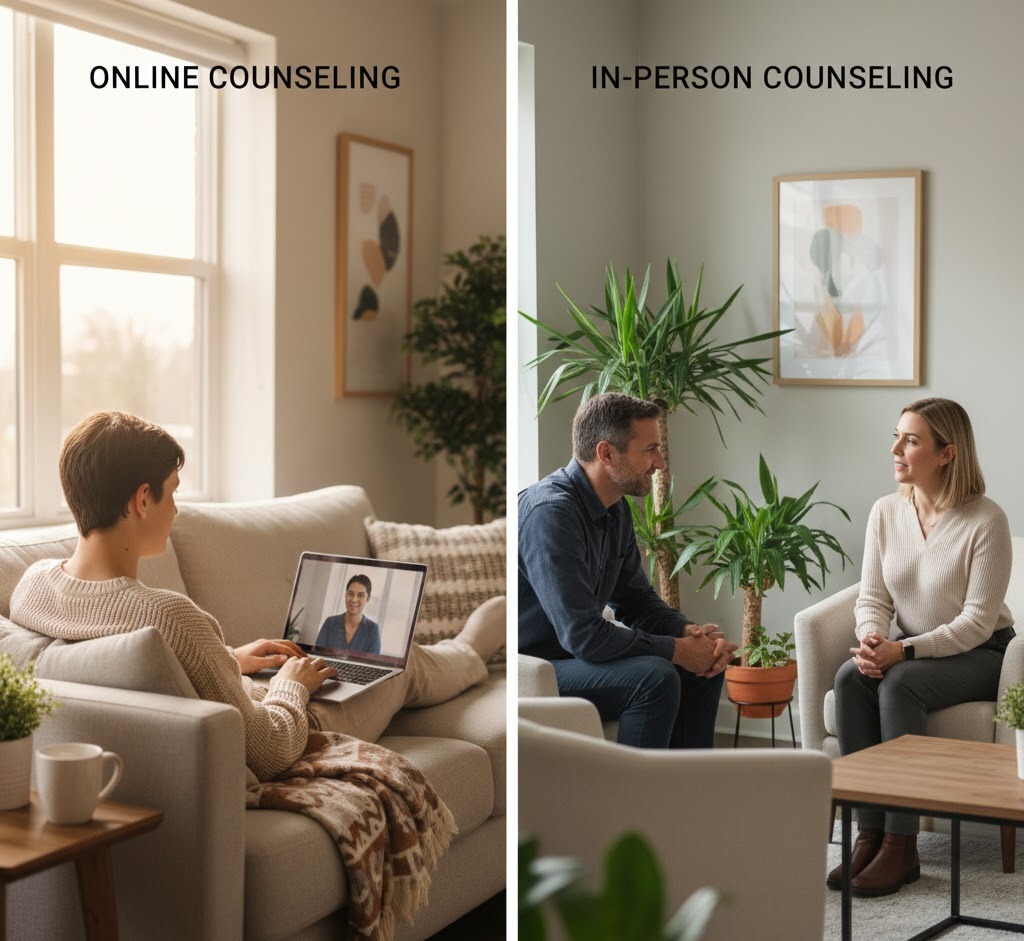
Choosing between virtual therapy and in-person therapy can feel overwhelming — especially when you’re already dealing with the weight of a mental health challenge. Both formats offer genuine, evidence-based support. But they differ in meaningful ways that can affect how comfortable, effective, and consistent your experience feels. This guide walks you through everything you need to know so you can make an informed, empowered choice.
Understanding the Landscape: What Changed After COVID-19
Before 2020, in-person therapy was the dominant model for mental health counseling. The pandemic changed everything. Therapists moved their practices online almost overnight, and clients discovered that teletherapy could be just as meaningful and effective as sitting on a couch across from their therapist. According to the American Psychological Association, 96% of psychologists offered online therapy by 2022 — a seismic shift driven by necessity that turned into a lasting preference for millions.
Today, both formats coexist and complement each other. Rather than seeing them as rivals, it helps to think of them as tools — each suited to different situations, schedules, and stages of your mental health journey.
What Is Online Therapy?
Online therapy, also called telepsychology or teletherapy, involves meeting with a licensed mental health professional through a digital platform. Sessions may occur via video conferencing, phone calls, messaging, or chat. Most virtual therapy platforms follow the same 50-minute session structure as traditional therapy — just without the commute.
It’s important to note that online therapy is not AI chatbot counseling. You are working with a real, credentialed therapist. The mode of delivery changes; the human connection and professional expertise do not.
Pros of Virtual Therapy
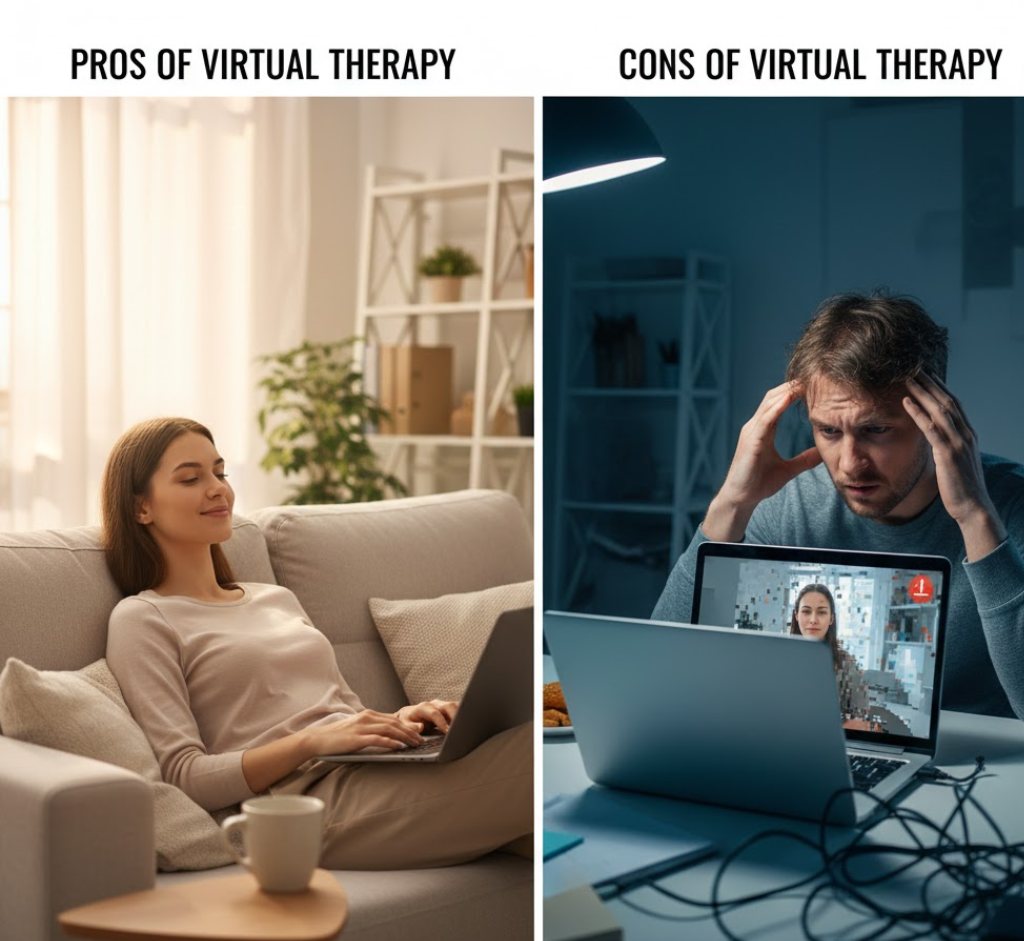
Advantages :
- Convenience — attend from your home, office, or anywhere with internet
- Removes transportation barriers and commuting stress
- Eliminates child care barriers for parents
- Greater access for rural areas and underserved communities
- Reduced stigma — no waiting rooms or chance encounters
- Multiple meeting methods: video, chat, phone
- Often more flexible scheduling
- Familiar home environment can aid comfort
Disadvantages :
- Dependence on technology and internet connection
- Reduced nonverbal communication cues
- Harder to build deep therapeutic rapport
- Privacy and confidentiality risks (cybersecurity)
- Not ideal for severe mental health conditions
- Risk of therapist burnout on subscription platforms
- Harder to assess therapist quality online
What Is In-Person Therapy?
Traditional in-person therapy takes place at a therapist’s office or treatment center. You and your therapist meet face-to-face, typically once a week, in a private and professionally designed environment. Sessions usually last 50 to 60 minutes, though group sessions or intensive support may run longer.
This format has decades of evidence-based research behind it. Most therapists were trained primarily for in-person work, which means their clinical intuition and intervention skills are often sharpest in this setting.
Pros of In-Person Therapy
Advantages
- Richer nonverbal communication and body language reading
- Stronger therapeutic alliance formation
- More treatment modalities available (EMDR, psychodrama, movement-based therapy)
- More thorough clinical assessment
- Better for crisis support and severe cases
- Neutral, distraction-free environment
- Longer track record of empirical support
Disadvantages
- Social stigma of visiting a clinic
- Scheduling inconvenience — limited to business hours
- Commuting adds time and cost
- Rural scarcity of specialized therapists
- Access barriers for those with social anxiety or agoraphobia
- Higher overhead may mean higher session costs
- Limited therapist options in smaller communities.
Effectiveness: Does It Matter How You Meet?
One of the most common questions people ask is: “Is online therapy as effective as in-person therapy?” The short answer is yes — for most conditions. Research has consistently shown that cognitive behavioral therapy (CBT) delivered virtually is just as effective as face-to-face CBT for conditions like depression, generalized anxiety, social anxiety, OCD, and PTSD.
However, effectiveness is not uniform. For individuals dealing with psychosis, suicidal ideation, acute trauma, schizophrenia, or other severe conditions, in-person care remains the gold standard. Similarly, specialized approaches like EMDR, psychodrama, and movement-based therapies are more naturally suited to physical co-presence. Interpersonal therapy and psychodynamic psychotherapy can be delivered in both formats, though some therapists find that the nuanced relational work involved in psychodynamic work is richer when done in person. Always consult your therapist to understand which format they believe will serve your individualized treatment plan best.
The Role of Therapeutic Alliance
One of the most powerful predictors of good therapy outcomes is the therapeutic alliance — the quality of the relationship and trust between you and your therapist. Building this bond online is entirely possible, but it can take longer and require more intentional effort from both parties.
In-person sessions naturally facilitate empathy through proximity, tone of voice, micro-expressions, and body posture — all signals that help therapists calibrate their responses and clients feel deeply understood. Therapeutic rapport and the therapist-client relationship remain foundational to healing, regardless of the format chosen.
That said, for many clients, the comfort of their home environment actually lowers their defenses and helps them open up more quickly in virtual settings. It really depends on the individual.
Accessibility and Who Benefits Most from Online Therapy
One of the most profound gifts of teletherapy is what it has done for accessibility. People who previously could not access quality mental health counseling now can — including:
Those living in remote or rural areas where specialist therapists are scarce; people with physical disabilities that make commuting difficult; working parents who cannot leave home due to childcare barriers; individuals in underserved communities with limited local options; and people whose conditions — like severe social anxiety or agoraphobia — make leaving home deeply distressing.
Virtual therapy has effectively dismantled many of the geographic and logistical walls that kept people from getting help. This democratization of mental healthcare is one of the most significant shifts in behavioral health in recent decades.
Cost, Insurance, and Affordability
The question of cost and affordability is nuanced. Online and in-person sessions typically cost the same per session when billed through a private therapist. However, virtual therapy can reduce indirect expenses significantly — eliminating travel costs, parking, and the need for childcare during appointments.
Some subscription-based therapy platforms offer lower weekly rates by bundling multiple sessions, though prices can increase over time. Always check your insurance coverage — many providers now cover teletherapy at the same rate as in-person sessions, especially post-pandemic.
For those on tighter budgets, look for therapists on sliding-scale payment structures or community mental health centers, both of which offer in-person and virtual options.
The Role of AI in Modern Therapy
It would be incomplete to discuss modern therapy without addressing artificial intelligence (AI) in therapy. AI-driven mental wellness apps and chatbots are proliferating, but they are not replacements for human therapy. What AI can offer is supplemental support — mood tracking, journaling prompts, psychoeducational content — between sessions.
The irreplaceable element of therapy is the human relationship. No algorithm can replicate the nuanced empathy, clinical training, and relational attunement of a licensed therapist. As AI continues to evolve in telehealth and behavioral health, it will augment the work of therapists rather than substitute for it.
How to Choose the Right Format for You
This is not a one-size-fits-all decision. Here are some guiding questions to help you reflect:
Do you have reliable internet and a private space at home? If yes, online therapy is a viable option. Do you need specialized interventions like EMDR or movement-based work? In-person may be more appropriate. Are you managing a severe condition or experiencing a mental health crisis? Prioritize in-person or intensive care. Do commuting costs, scheduling inconvenience, or childcare responsibilities make in-person difficult? Virtual therapy could be the more sustainable choice. Is social stigma or anxiety around visiting a clinic a barrier for you? Online therapy can offer a more private, comfortable starting point.
Talk openly with a licensed therapist about your needs and let them help guide the format decision. The most important step is simply beginning.
Frequently Asked Questions:
1. Is virtual therapy as effective as in-person therapy?
Yes, for most mental health conditions, research shows that virtual therapy — particularly cognitive behavioral therapy (CBT) — is as effective as in-person therapy. However, severe conditions like psychosis, acute suicidal ideation, or schizophrenia may require the more intensive support of in-person care.
2. What conditions are best treated through in-person therapy?
In-person therapy is often recommended for severe mental health conditions including psychosis, schizophrenia, high-risk suicidal ideation, and intellectual disabilities. Specialized therapies like EMDR, psychodrama, and movement-based therapy are also most effective in person.
3. Is online therapy covered by insurance?
Many insurance providers now cover teletherapy at the same rate as in-person sessions, especially following pandemic-era policy changes. Always verify your specific insurance coverage before beginning virtual therapy, as policies vary by provider and plan.
4. How do I know if a virtual therapist is qualified?
Look for therapists who are licensed in your state or region, have verified credentials and reviews, and operate on HIPAA-compliant platforms. Avoid platforms that do not clearly disclose their therapists’ qualifications, licensing, or experience areas.
5. Can I switch between online and in-person therapy?
Absolutely. Many therapists offer a hybrid model, allowing you to attend sessions in person when possible and switch to virtual when life gets in the way. Flexibility is one of the key benefits of modern mental health counseling. Discuss this with your therapist to find the right rhythm for you.
6. What if I live in a rural area with limited local therapists?
Virtual therapy is a game-changer for people in rural areas. Online platforms give you access to licensed therapists across a much wider geographic area, including specialists in specific conditions or therapeutic approaches that may not be locally available.
7. Is my information safe in online therapy?
It can be — provided your therapist uses HIPAA-compliant platforms with end-to-end encryption. Always ask your therapist about their platform’s cybersecurity protocols and what happens in the event of a data breach. Avoid conducting therapy sessions over unsecured public Wi-Fi networks.
8. How long does it take to build a therapeutic relationship online?
Building therapeutic rapport online can take slightly longer than in person because some nonverbal communication cues are limited. However, many clients find that the comfort and privacy of their home environment actually helps them open up faster. With a skilled therapist, a strong therapeutic alliance can absolutely be formed virtually.
9. What are the main barriers to accessing in-person therapy?
Common barriers include geographic limitations (especially in rural areas), transportation and commuting challenges, scheduling conflicts with work or childcare responsibilities, social stigma around visiting a clinic, and financial costs including session fees and indirect expenses like travel and parking.
10. Can virtual therapy help with social anxiety?
Yes — in fact, for some individuals with social anxiety, virtual therapy can be an excellent starting point because it removes the anxiety-provoking element of commuting to and sitting in a clinical waiting room. Cognitive behavioral therapy delivered online has strong evidence for treating social anxiety disorder effectively.