The end of a relationship can leave you feeling like you’re standing in the rubble of what once was, wondering how to rebuild. In those raw, vulnerable moments, the temptation to download dating apps, reach out to old flames, or dive headfirst into a rebound relationship can feel overwhelming.
But here’s what nobody tells you: healing after a breakup isn’t about finding someone new to make the pain go away. It’s about rediscovering the person you were before the relationship, the person you became during it, and most importantly, the person you’re meant to evolve into. This is your healing era mindset, and rushing through it robs you of one of life’s most transformative experiences.
Learning how to get over someone you loved without immediately seeking replacement affection is a superpower. It’s the difference between genuine emotional recovery after breakup and simply transferring your unresolved baggage onto an unsuspecting new partner. This journey requires patience, radical self-honesty, and the courage to sit with discomfort, but the person you become on the other side will be unrecognizable in the best possible way.
Understanding Why We’re Tempted to Rush Into New Relationships
Before we dive into how to heal after a breakup without dating again, let’s talk about why moving on from a past relationship feels so urgent. When a relationship ends, you don’t just lose a person—you lose your daily routines, your identity as part of a couple, your future plans, and often a significant portion of your social circle. This creates a void that feels absolutely unbearable.
Our brains are hard-wired for connection and pattern-seeking. A new relationship offers immediate relief from loneliness, validates that you’re still desirable, and provides a convenient distraction from processing painful emotions. Social media makes it worse, bombarding you with engagement announcements and couple photos that make you feel like you’re falling behind in some imaginary race.
The psychological research backs this up. Studies show that people who jump immediately into new relationships after a breakup often experience what experts call “emotional baggage transfer”—they bring unresolved issues, trust problems, and defensive patterns into their new relationship, setting it up for failure before it even begins. The cycle continues until someone finally breaks it by choosing to heal alone.
The Power of Embracing Your Healing Era
Social media has given us the beautiful concept of the “healing era”—that intentional period after a breakup where you focus entirely on yourself, your growth, and your wellbeing. This isn’t just about recovering from what ended; it’s about actively building something new within yourself.
Think of this time as your breakup glow up journey. Not just physically (though that post-breakup gym membership hits differently), but mentally, emotionally, and spiritually. This is when you get to reconstruct your entire life according to your authentic preferences, not compromises or someone else’s vision.
During your healing era, you’ll discover things about yourself that were buried or ignored during your relationship. Maybe you’re actually a morning person when you’re not accommodating someone else’s schedule. Perhaps you love solo travel more than a couple’s vacations. You might realize your taste in music, food, or weekend activities was heavily influenced by your partner’s preferences. This self-discovery is invaluable and impossible to achieve while immediately dating someone new.
How to Emotionally Detach from Your Ex
One of the biggest obstacles in moving on from a past relationship is that emotional attachment doesn’t disappear the moment the relationship ends. You can logically know it’s over while your heart is still very much invested. Learning how to emotionally detach from your ex is crucial for your healing.
Start with the no-contact rule, which most relationship experts swear by. This means exactly what it sounds like: no texting, no calling, no “casual” coffee dates, no checking their social media. Block, mute, or unfollow as needed. This isn’t about being petty—it’s about giving your brain the space it needs to rewire itself. Every time you interact with your ex, you’re essentially reopening the wound and resetting your healing timeline.
Delete or archive the photos, put away the gifts, and remove physical reminders from your immediate environment. You don’t have to throw everything away if you’re not ready, but keeping their hoodie on your bed or their photo as your wallpaper is self-sabotage. Create physical distance that mirrors the emotional distance you’re trying to build.
Healthy Ways to Get Over Someone Slowly
Despite what movies and songs suggest, healing after a breakup isn’t supposed to happen overnight. The “healthy ways to get over someone slowly” approach recognizes that emotional recovery after breakup is a marathon, not a sprint.
Allow yourself to grieve fully. This means feeling all the feelings—the anger, the sadness, the regret, the relief. Cry when you need to. Scream into a pillow. Write letters you’ll never send. Journal until your hand cramps. These aren’t signs of weakness; they’re necessary components of processing loss. Suppressing emotions just means they’ll emerge later, often at the most inconvenient times.
Invest in your physical health as a foundation for emotional health. Exercise releases endorphins, improves sleep quality, and gives you a healthy outlet for stress and anger. You don’t need to become a gym rat overnight, but moving your body regularly—whether through yoga, running, dancing, or hiking—makes a measurable difference in how you feel.
The mind-body connection during heartbreak is real. Studies show that emotional pain activates the same brain regions as physical pain. Exercise not only produces feel-good chemicals but also gives you a sense of control when everything else feels chaotic. Setting and achieving fitness goals—even small ones like walking 10,000 steps daily—rebuilds the confidence that heartbreak shattered.
How to Rebuild Yourself After Heartbreak
This is where the real magic happens—the post breakup self improvement phase where you actively construct the next version of yourself. How to rebuild yourself after heartbreak isn’t just about getting back to who you were before the relationship; it’s about evolving into someone even better.
Start by reconnecting with your individual identity. Who were you before this relationship? What hobbies, interests, or dreams got sidelined? Make a list of things you loved that got lost along the way, and start reintegrating them into your life. Always loved painting but your ex thought it was a waste of time? Buy those art supplies. Missed your Thursday night poker game with friends? Restart that tradition.
Work on the patterns or issues that emerged in your relationship. If you noticed you struggled with communication, consider therapy or communication workshops. If you realized you lost yourself in the relationship, work on building stronger personal boundaries. If you see codependent tendencies, learn about healthy interdependence. This self-awareness prevents you from carrying the same baggage into future relationships.
How to Focus on Self Growth After Breakup
Ways to move on without rebound relationships center around redirecting the energy you’d pour into dating toward personal development. How to focus on self growth after a breakup requires intentionality and commitment, but it’s arguably the most valuable investment you’ll ever make.
Build skills and competencies that make you feel capable and confident. These could be professional skills that advance your career, practical skills like cooking or home repair, creative skills like music or writing, or social skills like public speaking. Mastery of anything boosts self-esteem and reminds you that you’re a capable, growing person.
Expand your social circle and community connections. Join clubs, classes, volunteer organizations, sports leagues, or hobby groups. Meeting new people who know you only as your current self—not as half of a couple—reinforces your individual identity. These connections also reduce loneliness and create a fuller, richer life that doesn’t revolve around dating.
Travel or have new experiences, even small ones. Novelty helps your brain form new neural pathways and creates memories that aren’t tied to your ex. This doesn’t mean you need to backpack through Europe (though you can!). Even exploring new neighborhoods in your city, trying new restaurants, or taking weekend trips can provide this benefit.
Signs You Are Not Ready for a Relationship
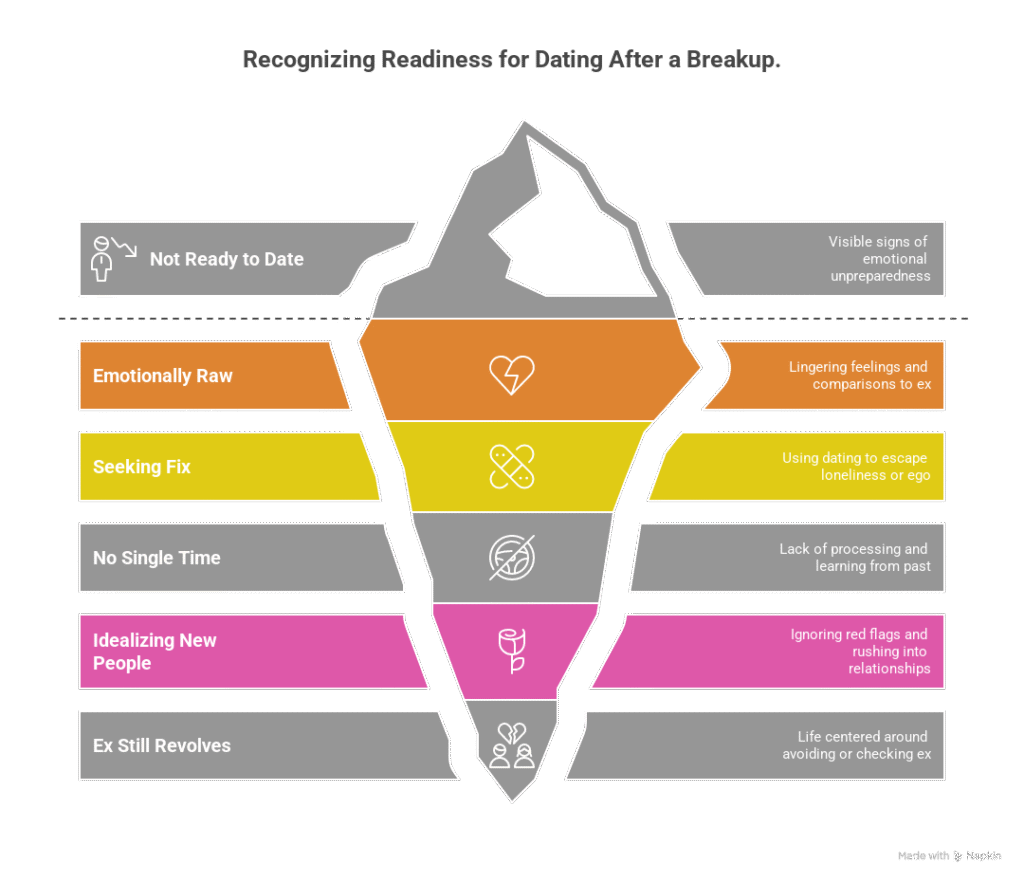
One of the most important aspects of how to move on after a breakup is recognizing when you’re not ready to date again. Jumping into something new prematurely doesn’t just risk hurting you—it can hurt the other person too. Here are the signs you are not ready for a relationship:
You’re still emotionally raw about your ex. If mentioning their name makes you tear up, if you constantly compare potential partners to them, or if you’re still angry or bitter, you need more time. You should be able to think about them with relative neutrality before dating someone new.
You’re looking for someone to “fix” how you feel. If your primary motivation for dating is to not feel lonely, to boost your ego, or to prove something to your ex, you’re seeking a Band-Aid, not a partner. You should want to date because you’re excited about meeting someone, not because you’re running from your feelings.
You haven’t taken time to be single. If you jump from relationship to relationship without breathing room in between, you never process what happened or learn from it. This pattern often indicates fear of being alone or using relationships to define your worth—both of which require addressing.
You’re idealizing new people or moving too fast. If you’re declaring someone your soulmate after three dates, planning your future together immediately, or ignoring obvious red flags, you’re likely not seeing them clearly. Desperation makes us overlook incompatibilities.
Your life still revolves around your ex. If you choose your activities based on avoiding them, constantly checking their social media, or bringing them up in every conversation, you’re not emotionally available for someone new. Your ex shouldn’t occupy more mental real estate than your current interests.
You’re seeking validation rather than connection. If you’re dating to prove you’re desirable rather than to genuinely connect with someone, you’re not ready. Healthy dating comes from a place of wholeness, not from a need to fill a void.
How Long Should You Stay Single After Breakup
This is the million-dollar question, and unfortunately, there’s no one-size-fits-all answer to how long you should stay single after a breakup. The commonly cited “half the length of the relationship” rule is just a rough guideline, not a requirement.
What matters more than a specific timeline is your emotional readiness. Some people might be ready after three months following a short, casual relationship, while others might need a year or more after a long-term, serious partnership. The depth of the relationship, how it ended, your attachment style, and your emotional resilience all play roles.
Focus on markers of readiness rather than calendar dates. You’re likely ready when you can think about your ex without intense pain, you’ve processed the lessons from the relationship, you’re genuinely content with your single life, you’ve addressed patterns from previous relationships, and you’re interested in someone new for who they are rather than what they represent.
The Gift You’re Giving Your Future Self
Choosing to heal properly rather than rushing into a rebound relationship is one of the greatest acts of self-love you can perform. Yes, it’s harder. Yes, it takes longer. Yes, there will be moments when you question whether it’s worth it.
But consider the alternative: carrying unprocessed pain, unexamined patterns, and unmet needs into a new relationship. That’s not fair to you or your future partner. That’s how people end up in the same toxic dynamics with different faces. That’s how you stay stuck while appearing to move forward.
The time you invest in genuine healing—in learning how to move on after a breakup without using another person as a crutch—is time that pays dividends forever. The self-awareness you develop, the boundaries you establish, the confidence you build, and the completeness you cultivate become the foundation for every relationship you have moving forward, romantic and otherwise.
So take your time. Feel your feelings. Do the work. Invest in yourself. Trust the process. Your future self—healed, whole, and ready for healthy love—is already thanking you.
Frequently Asked Questions:
1. How long does it take to fully get over someone you loved deeply?
There’s no universal timeline, as healing depends on relationship length, emotional depth, and personal resilience. Most experts suggest anywhere from several months to over a year for serious relationships. The key is focusing on emotional readiness markers rather than specific timeframes—you’ll know you’re ready when thinking about your ex doesn’t trigger intense pain and you’re genuinely content with your current life.
2. What are the biggest mistakes people make when trying to move on?
The biggest mistakes include jumping into rebound relationships to avoid pain, stalking an ex on social media, romanticizing the past while forgetting why it ended, and refusing to process emotions by staying constantly busy. People also commonly rush the healing process, compare their timeline to others, or try to stay friends with an ex before establishing emotional distance, all of which delay genuine recovery.
3. Is the no-contact rule really necessary for healing?
Yes, the no-contact rule is one of the most effective strategies for emotional recovery after breakup, giving your brain space to rewire without constantly reopening the emotional wound. Most relationship experts recommend at least 30-60 days of zero communication, though many suggest longer for serious relationships. This means no texting, calling, social media stalking, or “casual” meetups—true healing requires creating both physical and digital distance from your ex.
4. How do I stop myself from checking my ex’s social media?
Block, unfollow, or mute your ex on all platforms to remove the temptation entirely—out of sight truly helps create out of mind. Ask a trusted friend to change your social media passwords temporarily if you lack self-control, and replace the urge to check with a healthier habit like calling a friend, journaling, or exercising. Remember that what people post online is a highlight reel, not reality, and engaging with their content only resets your healing progress.
5. Can you be friends with an ex, and if so, when?
Friendship with an ex is possible but requires both people to have completely moved on emotionally, with no lingering resentment or hidden hopes for reconciliation. Most experts recommend waiting at least six months to a year of no contact before attempting friendship, and only if both parties are genuinely over the relationship. If staying in contact prevents you from healing or pursuing new relationships, friendship isn’t worth it—your wellbeing comes first.
6. What’s the difference between healing and just distracting yourself?
Healing involves actively processing emotions through therapy, journaling, conversation, and self-reflection, which gradually reduces emotional intensity over time. Distraction is staying constantly busy to avoid feeling anything, which provides temporary relief but doesn’t actually resolve the underlying pain. True healing lets you think about the relationship with decreasing emotional charge, while distraction just postpones the inevitable processing you’ll eventually need to do.
7. How do I know if I’m ready to date again or just lonely?
You’re ready to date when you’re genuinely content with your single life and interested in someone for who they are, not what they represent or how they make you feel about yourself. You’re just lonely if you’re seeking a relationship primarily to avoid being alone, to fill a void, or to validate your worth. Ready means addition to your life; lonely means solution for your emptiness—the difference is crucial for both your wellbeing and fairness to potential partners.
8. What should I do if I keep having dreams about my ex?
Dreams about an ex are completely normal during the healing process and don’t mean you’re not making progress or that you should get back together. Your subconscious is processing the relationship, memories, and emotions even while you sleep. Simply acknowledge the dreams without overanalyzing them, continue your healing practices during waking hours, and understand that dream frequency typically decreases naturally as emotional healing progresses over time.
9. Is it normal to feel guilty about moving on and being happy?
Yes, survivor’s guilt after a breakup is surprisingly common, especially if you initiated the split or if your ex is struggling visibly. Remember that your happiness doesn’t require your ex’s suffering, and staying stuck in pain doesn’t help either of you heal. You’re allowed to move forward, laugh, enjoy life, and eventually love again—your happiness isn’t a betrayal, it’s a natural part of healing and doesn’t diminish what you once shared.
10. How can I support a friend going through a breakup without enabling unhealthy behavior?
Support your friend by listening without judgment, validating their feelings, and being present during difficult moments while gently redirecting destructive behaviors like constant ex-stalking or rebound dating. Encourage healthy coping mechanisms like therapy, exercise, and new hobbies rather than enabling revenge plots, substance abuse, or obsessive social media monitoring.