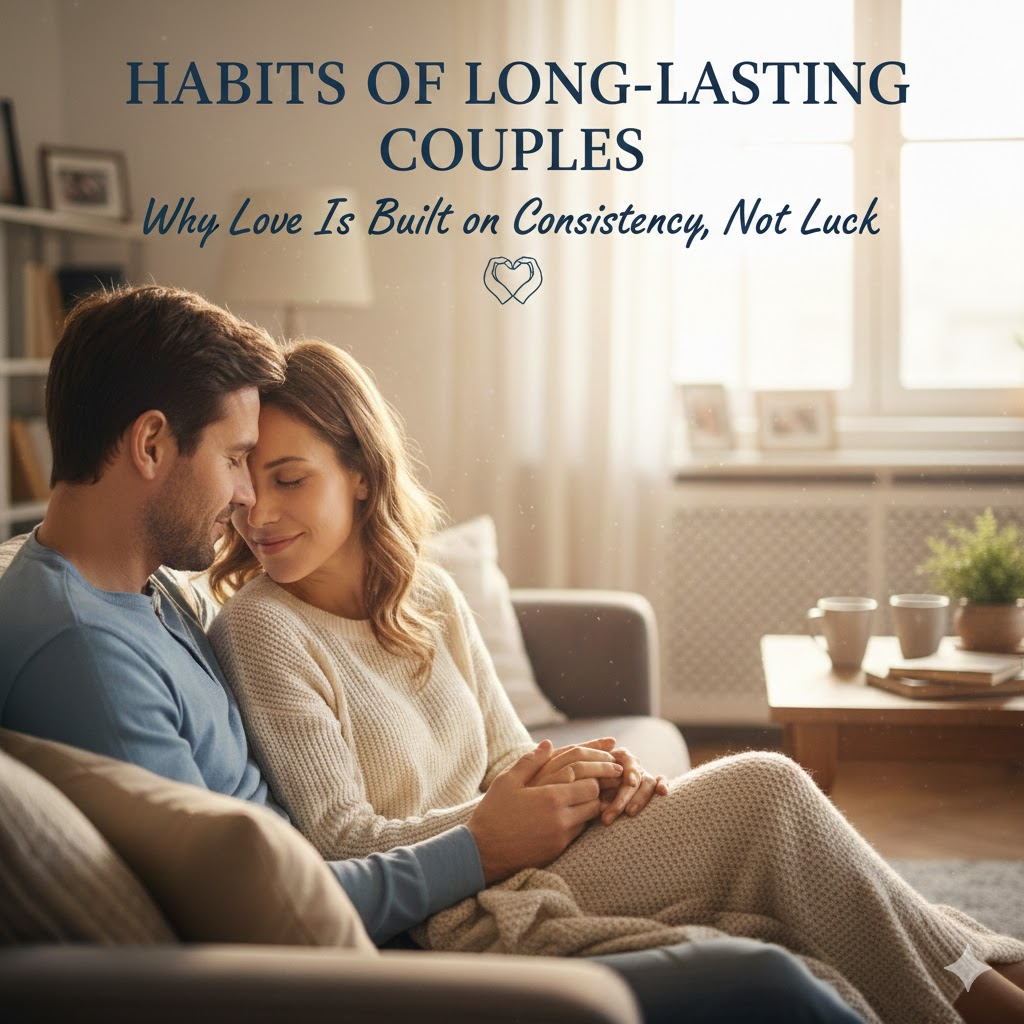
We’ve all seen them—the couples who seem unshakeable. The ones who’ve been together for decades and still hold hands at the grocery store. The relationship goals that make you wonder: What do they know that we don’t?
Here’s the truth: Long-lasting relationships aren’t built on fairy-tale romance or perfect compatibility. They’re built on small, consistent habits that create emotional safety, trust, and deep intimacy over time.
Love, by itself, is not enough. You also need emotional stability, security, self-mastery, compassion, and empathy. But the real question is: How do these grand concepts translate into everyday life?
The answer is simpler than you think. Strong, long-term relationships aren’t maintained by grand gestures or lucky compatibility—they’re sustained by intentional, daily practices that anyone can learn.
Let’s explore the realistic habits that help couples not just survive, but thrive through chaos, heartbreak, and change.
The Core Habits of Happy, Long-Lasting Couples

1. They Communicate Openly (Even When It’s Uncomfortable)
Happy couples don’t avoid difficult conversations—they welcome them. They understand that fostering intimacy means having frank and honest conversations, even when it’s hard.
What this looks like in real life:
- Using “we” language instead of “you vs me” when discussing problems
- Active listening—not just hearing, but truly understanding and caring
- Checking in often: “How are you really feeling?” or “What’s going on for you?”
- Talking about money openly, because financial transparency prevents resentment from building
The psychology behind it: When couples communicate with curiosity instead of criticism, they create a safe space where both partners feel heard. This builds trust—the foundation of every lasting relationship.
Try this: Schedule a 10-minute daily check-in where you both share one thing that’s on your mind. No phones, no distractions—just connection.
2. They Choose Each Other—Every Single Day
Long-term love isn’t something you fall into and stay there. It’s a daily decision. Solid relationships are built by partners who consciously turn toward each other, even when life gets messy.
What this looks like in real life:
- Saying “I love you” often—and meaning it
- Supporting each other’s dreams, even when they’re scary
- Always having each other’s backs, especially during life’s ups and downs
- Making your partner feel loved in ways they actually recognize (more on this next)
The psychology behind it: Choosing each other daily creates security. When you know your partner is genuinely in your corner, you build emotional stability that helps you weather any storm together.
Try this: At the end of each day, tell your partner one specific reason you chose them today. “I chose you today because of the way you made me laugh when I was stressed.”
3. They Speak Each Other’s Love Language
One of the most powerful habits of lasting couples is learning how their partner feels most loved—and showing love in that language, not just their own.
The five love languages are:
- Words of affirmation (verbal appreciation and encouragement)
- Acts of service (doing helpful things)
- Quality time (undivided attention)
- Physical touch (hugs, hand-holding, affection)
- Gifts (thoughtful tokens of care)
What this looks like in real life: If your partner’s love language is acts of service, making them a cup of tea or helping with chores speaks volumes. If yours is words and touch, you need verbal reassurance and physical affection to feel connected.
The psychology behind it: When both partners feel filled up in their own language, communication improves, resentment decreases, and intimacy deepens.
Try this: Take the 5 Love Languages quiz together and ask each other: “What can I do this week that would really make you feel loved?”
4. They Don’t Let Fights Drag
Conflict is inevitable—but how you handle it determines whether your relationship grows stronger or breaks down. Happy couples resolve conflicts quickly and with respect.
What this looks like in real life:
- Taking responsibility in arguments instead of blaming
- Acknowledging your part: “I’m sorry I didn’t listen. That wasn’t fair.”
- Not using punishment or the silent treatment
- Making up after fights and moving forward together
The psychology behind it: Letting arguments linger creates resentment. But when you resolve conflicts with curiosity (“What’s really bothering you?”) instead of criticism, you build emotional intimacy.
Try this: After a disagreement, don’t go to bed angry. Even if you can’t solve everything, say: “I love you, and we’ll figure this out together.”
5. They Let Go of the Little Things
Strong couples have learned what’s worth fighting for—and what isn’t. They ask themselves: Will this matter in five years? If not, they let it go.
What this looks like in real life:
- He leaves socks around. She talks too much when he’s tired. Instead of building resentment, they laugh it off.
- Choosing kindness over being right
- Remembering that quirks are part of the person you love
The psychology behind it: Holding onto minor annoyances creates toxicity. Letting go creates space for love, appreciation, and joy.
Try this: When something small bothers you, pause and ask: “Is this really worth the energy?” Often, the answer is no.
6. They Create Time to Connect—Every Day
Even in the chaos of parenting, work, and life, happy couples find micro-moments to reconnect. They understand that daily connection prevents disconnection.
What this looks like in real life:
- A hug in the hallway
- A shared coffee in the morning
- A nighttime chat before bed
- Establishing routines together—like cooking dinner side by side or folding laundry while watching a favorite show
The psychology behind it: Quality time isn’t about grand dates (though those are nice). It’s about purposeful time together that reminds you why you’re a team.
Try this: Make bedtime sacred for connection. Turn off Netflix and talk for 10 minutes about your day.
7. They Don’t Stop Dating
Couples who last understand that romance doesn’t end after the honeymoon phase. They continue dating each other, even decades in.
What this looks like in real life:
- Planning a date night (even if it’s just a walk in the park)
- Surprising each other with small gestures of thoughtfulness
- Demonstrating love, kindness, care, and respect in ways their partner values
The psychology behind it: Play and novelty release dopamine and oxytocin—the bonding chemicals that keep romance alive.
Try this: Schedule one date night per month. It doesn’t have to be fancy—just intentional.
8. They Show Appreciation Regularly
Gratitude is a superpower in relationships. Happy couples make it a habit to express appreciation daily—even for small things.
What this looks like in real life:
- “Thank you for doing the dishes.”
- “I love how patient you are with the kids.”
- “I appreciate you working so hard for our family.”
The psychology behind it: Showing specific appreciation counters negativity and reminds your partner they’re valued.
Try this: Every day, tell your partner one specific thing you appreciate about them.
9. They Grow Individually, Side-by-Side
Healthy couples don’t become the same person. They maintain a healthy balance between common interests and individual interests, which keeps the relationship fresh and interesting.
What this looks like in real life:
- Supporting personal development—reading, learning, growing
- Pursuing individual passions that feed the shared life
- Allowing each other to evolve without needing to control the process
The psychology behind it: Stagnation kills intimacy. Growth keeps love alive. When both partners bring their best selves to the relationship, everyone benefits.
Try this: Encourage your partner to pursue one hobby or interest that’s just for them. Celebrate their growth.
10. They Balance Responsibilities Like a Team
Burnout kills relationships. Happy couples aim for fairness and support, regularly checking in to make sure no one feels overwhelmed.
What this looks like in real life:
- Making a weekly task plan together
- Swapping roles now and then to build empathy
- Asking each other: “Do you feel supported?”
The psychology behind it: When both partners feel seen and supported, resentment can’t take root.
Try this: Once a week, sit down and ask: “What’s on your plate this week? How can I help?”
11. They Remain Individuals
Strong couples understand that becoming too merged creates a suffocating environment. They give each other personal space and respect boundaries.
What this looks like in real life:
- Having separate friend groups
- Pursuing solo hobbies
- Spending time apart without guilt
The psychology behind it: Remaining individuals keeps the relationship balanced and prevents codependency.
Try this: Once a month, take a few hours for yourself—and encourage your partner to do the same.
12. They Keep Life Fun and Full of Adventure
Happy couples prioritize play, spontaneity, and joy. They understand that laughter and shared experiences build lasting memories.
What this looks like in real life:
- Saying yes to spontaneous adventures
- Turning chores into playful challenges
- Creating mini adventures—day trips, board games, dancing in the kitchen
The psychology behind it: Fun releases bonding chemicals and reminds you that love can be lighthearted, not just dutiful.
Try this: Plan one “micro-adventure” this week—something small, spontaneous, and fun.
13. They’re Realistic About Love
Strong couples understand that relationships aren’t fairytales. They live “happily, angrily, joyfully, sadly ever after.” They know down times are normal—and they approach those times with curiosity and learning.
What this looks like in real life:
- Not expecting perfection
- Understanding that all relationships have rough patches
- Focusing on consistency over fairy-tale romance
The psychology behind it: Realistic expectations prevent disappointment and build resilience.
Try this: Remind yourself: “We’re not perfect—we’re intentional.”
Real-Life Examples: What These Habits Look Like
The Morning Coffee Ritual
Emma and James both work demanding jobs and have two young kids. Every morning, they wake up 15 minutes early to share a cup of coffee together before the chaos begins. No phones. Just connection. This micro-moment reminds them they’re a team.
The Post-Argument Check-In
After a heated argument about finances, Sarah and Tom took a 30-minute break to cool down. Then they came back together, acknowledged their parts in the fight, and problem-solved as a team. They didn’t let the fight drag—they resolved it with respect.
The Adventure Mindset
When life felt monotonous, Maya and Daniel decided to inject some fun. They started a tradition: every month, they’d flip a coin to pick a random activity—hiking, painting, trying a new restaurant. The spontaneity brought back the spark.
Conclusion: Love Is Built, Not Found
Here’s what happy, long-lasting couples know: Love doesn’t last because of luck. It lasts because of habits.
No relationship is perfect. There will be chaos, heartbreak, change, grief, financial struggles, and seasons where you feel like failures. But couples who thrive understand that lasting love is built brick by brick—through small, consistent actions that create trust, intimacy, and security.
The fairy tale isn’t the destination. It’s choosing each other, every single day.
You don’t need to be perfect. You just need to be intentional. Start with one habit. One conversation. One small shift.
Because love—real, lasting, joyful love—isn’t a miracle. It’s a choice. And it’s worth every second of the work.
Frequently Asked Questions About Long-Lasting Relationships
1. What’s the most important habit for a lasting relationship?
While all habits matter, choosing each other daily is foundational. Long-lasting love isn’t something you fall into and stay in—it’s a conscious decision you make every single day. This means actively supporting each other’s dreams, always having each other’s backs, and turning toward your partner even when life gets messy. When both partners consistently choose the relationship, everything else—communication, intimacy, trust—becomes easier to build.
2. How can we keep romance alive after years together?
The secret is simple: don’t stop dating. Couples who last understand that romance requires intentional effort, not just spontaneous passion. Schedule regular date nights (even simple ones like a walk in the park), create daily rituals like sharing morning coffee, and prioritize play and novelty. These micro-moments of connection release dopamine and oxytocin—the bonding chemicals that keep romance alive. Remember: it’s not about grand gestures; it’s about purposeful time together.
3. Is it normal to fight in a healthy relationship?
Absolutely. Conflict is inevitable in any relationship—what matters is how you handle it. Healthy couples resolve conflicts quickly and with respect. They take responsibility in arguments, acknowledge their part, and don’t let fights drag on for days. The key is using curiosity instead of criticism: ask “What’s going on for you?” rather than “Why are you being like that?” When you approach disagreements as a team problem to solve together, conflict actually strengthens your bond.
4. What are love languages and why do they matter?
Love languages are the different ways people give and receive love. The five types are: words of affirmation, acts of service, quality time, physical touch, and gifts. They matter because you might be showing love in your language while your partner needs it in theirs. For example, if your partner’s love language is acts of service but yours is words and touch, you might both be trying hard but still feeling unloved. Take the 5 Love Languages quiz together and learn to speak each other’s language—it’s transformational.
5. How much time should couples spend together vs. apart?
There’s no perfect formula, but the key is maintaining a healthy balance between common interests and individual interests. Strong couples remain individuals—they don’t become the same person. Having separate hobbies, friend groups, and personal space prevents relationships from becoming suffocating. The goal is to grow individually while building a shared life side-by-side. A good rule of thumb: make sure both partners have regular time for personal pursuits without guilt.
6. How do we handle financial stress without it destroying our relationship?
Talk about money openly and often. Financial transparency is crucial because fighting about money is one of the most commonly-cited reasons for relationship breakdowns. Create a weekly or monthly money check-in where you discuss budgets, goals, and concerns together. Use “we” language: “How can we tackle this?” instead of “You spent too much.” Remember: you’re a team balancing responsibilities, not opponents. When both partners feel seen and supported financially, resentment can’t take root.
7. What if my partner and I are growing in different directions?
This is actually healthy! Growth keeps love alive; stagnation kills intimacy. The key is to grow individually, side-by-side, rather than growing apart. Support each other’s personal development—reading, learning new skills, questioning beliefs. Don’t fear evolution; celebrate it. The strongest couples allow each other to evolve without trying to control the process. Just make sure you’re also setting shared goals and dreaming about your future together, so you’re still pulling in the same direction.
8. How can we reconnect when we feel distant?
Start small with daily micro-moments of connection. You don’t need a grand vacation to reconnect—you need consistency. Try these: a 10-minute daily check-in with no phones, a hug in the hallway, a nighttime chat before bed, or establishing routines together like cooking dinner side-by-side. Express one specific appreciation daily: “I love how patient you were today.” Sometimes, just asking “How can I help?” or “What would make you feel loved this week?” can bridge the gap.
9. What’s the difference between letting things go and avoiding important issues?
Ask yourself: “Will this matter in five years?” Letting go of the small stuff means not building resentment over minor annoyances—like socks left around or different communication styles. These are quirks, not dealbreakers. However, avoiding important issues—like lack of emotional safety, financial dishonesty, or unresolved trauma—will create bigger problems. If something affects your trust, respect, or emotional stability, it needs a frank and honest conversation. Use curiosity to explore: “This feels important to talk about.”
10. Is a perfect relationship achievable, or should we accept flaws?
There’s no such thing as a perfect relationship—only intentional ones. You won’t live “happily ever after”; you’ll live “happily, angrily, joyfully, sadly ever after.” All relationships have down times, rough patches, and seasons of struggle. The couples who last understand this and approach challenges with curiosity and learning rather than disappointment. Focus on consistency over perfection. Remember: love isn’t found—it’s built, brick by brick, through small daily choices. And that’s what makes it real.